
THE NEXT
EVOLUTION
OF HYPNOSIS
The profession is changing. The opportunity may be bigger than we realize
HYPNOSIS WORLD MAGAZINE • FOUNDING ISSUE #001 • SEPTEMBER 29, 2026
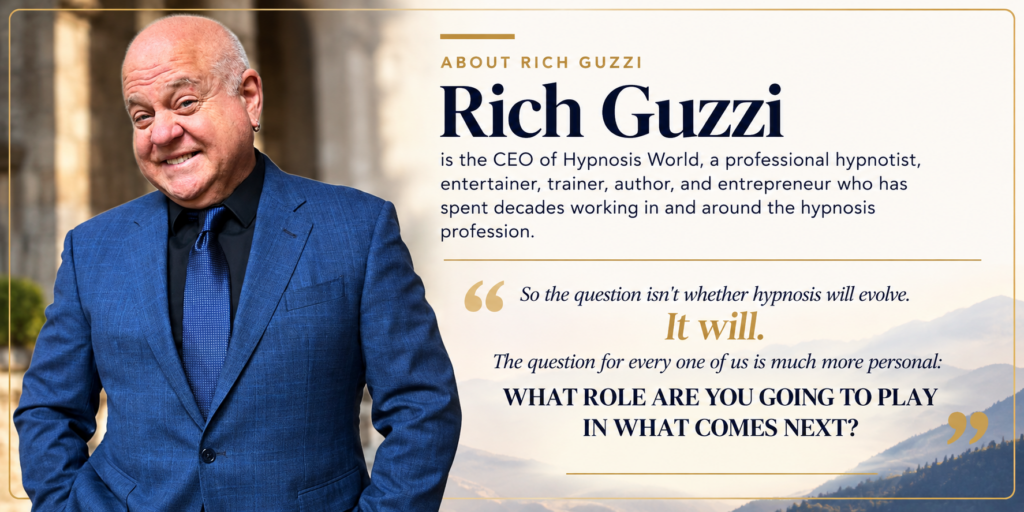
by Rich Guzzi
THE NEXT
EVOLUTION
OF HYPNOSIS
The profession is changing. The opportunity may be bigger than we realize
HYPNOSIS WORLD MAGAZINE • FOUNDING ISSUE #001 • SEPTEMBER 29, 2026
by Rich Guzzi

For more than a century, hypnosis has been reinvented, renamed, repackaged, researched, challenged, dismissed, rediscovered, and debated.
And yet it remains.
Why?
Because underneath all the terminology, theories, techniques, and competing schools of thought is something remarkably powerful:
Human beings can change.
We can change what we focus on. We can change what we believe. We can change how we respond.
We can change habits, expectations, emotional associations, internal representations, and patterns of behavior.
And hypnosis gives us a fascinating collection of tools for influencing that process.
But the next evolution of hypnosis isn’t going to come from discovering one magical induction.
It won’t come from another script.
It won’t come from deciding which school of hypnosis finally has everything figured out.
The next evolution is going to be much bigger than that.
It’s going to happen as better science, better practitioners, new technology, greater specialization, stronger businesses, and better ways of connecting people with hypnosis begin coming together.
And for those of us already in this profession, that creates an extraordinary opportunity.
THE SCIENCE IS GETTING BETTER
.
For generations, hypnosis existed in an uncomfortable place.
Practitioners saw remarkable things happen. Clients reported meaningful changes. Stage hypnotists demonstrated extraordinary responses in front of thousands of people.
But explaining exactly what was happening inside the brain was considerably more difficult.

That is changing.
Modern neuroscience has given researchers tools previous generations simply didn’t have.
Researchers can examine brain activity, attention, perception, expectation, pain processing, cognitive control, and other phenomena associated with hypnotic responding.
That doesn’t mean science has suddenly answered every question about hypnosis.
It hasn’t.
And that’s important.
A mature profession shouldn’t be afraid to say:
We don't know yet.
In fact, one of the greatest opportunities for hypnosis is becoming better at separating three things:
What we know.
What the evidence suggests.
What we simply believe because someone taught it to us.
Those aren’t the same thing.
Hypnosis doesn’t become weaker when we question exaggerated claims.
It becomes stronger.
Because the more accurately we understand what hypnosis can—and cannot—do, the more confidently we can talk about it with the public, healthcare professionals, researchers, and our clients.
The future doesn't require us to make hypnosis sound miraculous. The reality is interesting enough.
TECHNOLOGY IS ABOUT TO
CHANGE THE PROFESSION
Artificial intelligence is already changing writing, advertising, education, healthcare, research, entertainment, and business.
Hypnosis will not somehow remain untouched.
But the most interesting question isn’t:
“Will AI replace hypnotists?”
That’s probably the wrong question.
The better question is:
What can a great hypnotist do now that wasn't possible five years ago?
Consider the possibilities.
A solo practitioner can use technology to help research an unfamiliar subject, create educational content, analyze marketing, build follow-up systems, develop client resources, translate educational materials, organize notes, create videos, reach audiences around the world, automate administrative work, build courses, run communities, and operate with capabilities that once required an entire staff.
That changes the economics of being an independent practitioner.
But there’s a catch.
As technology makes information easier to create, information itself becomes less valuable.
Anyone can generate another article. Another script. Another social post. Another PDF.
What becomes more valuable?
Experience. Judgment. Trust. Personality. Reputation. Results. Human connection.
AI may make average information incredibly cheap. That could make genuinely exceptional practitioners considerably more valuable.
The hypnotist of the future won’t compete with technology by pretending it doesn’t exist.
They’ll use technology to eliminate low-value work so they can spend more time doing the things technology cannot easily replicate.
Understanding another human being.
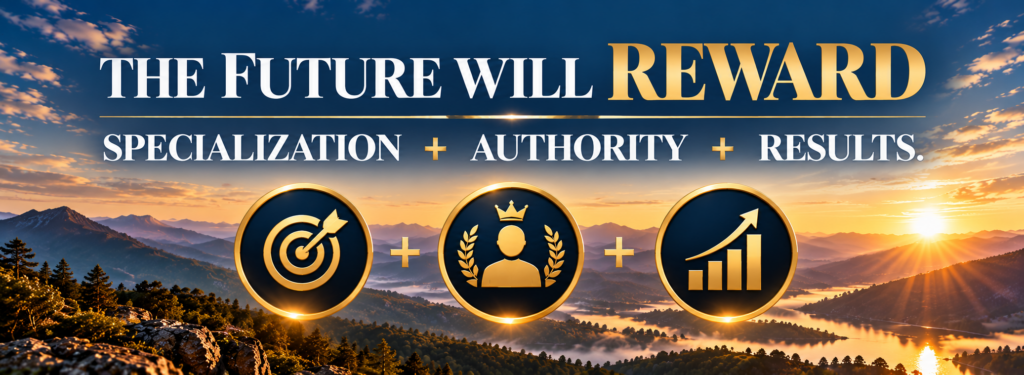
THE GENERALIST IS GOING TO
HAVE A HARDER TIME
.
Look at the average hypnosis website.
You’ll often find something like:
Smoking • Weight • Stress • Anxiety • Confidence • Relationships • Sports • Fears • Phobias • Sleep • Motivation • Pain • Past Lives • Performance
And twenty other things.
The message is essentially:
“I do hypnosis.”
But consumers generally don’t wake up wanting hypnosis.
They wake up wanting a problem solved.
The golfer wants to stop choking on the back nine.
The executive wants to speak confidently in front of 500 people.
The smoker wants to stop thinking about cigarettes.
The performer wants to walk onto the stage without panic.
The person struggling with a fear wants their freedom back.
That’s why specialization represents one of the biggest opportunities in the profession.
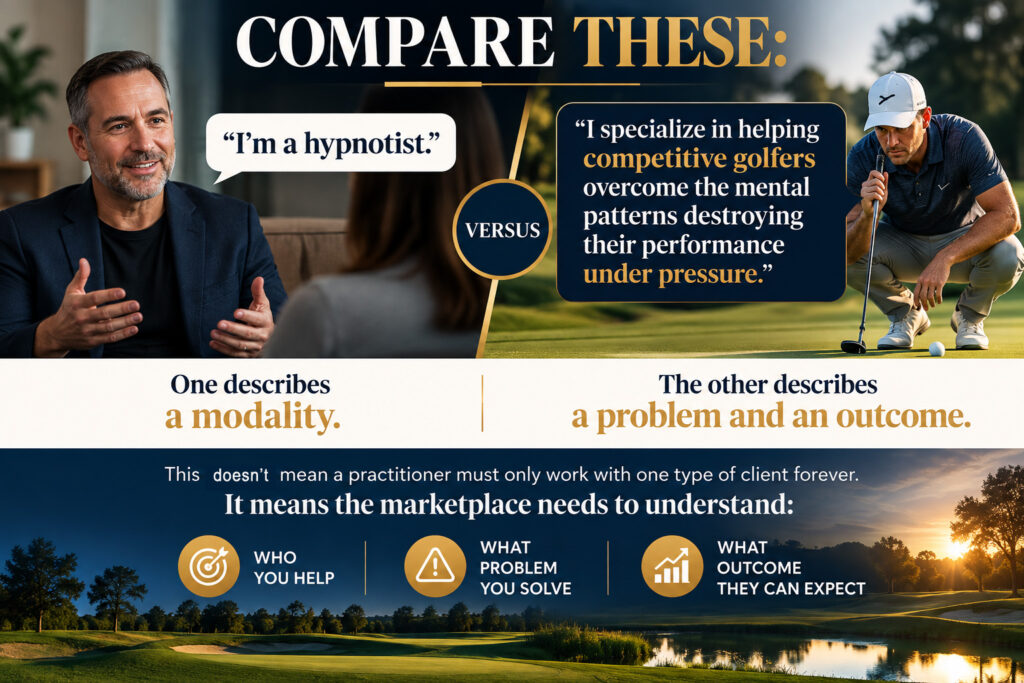
One describes a modality.
The other describes a problem and an outcome.
This doesn’t mean a practitioner must only work with one type of client forever.
It means the marketplace needs to understand:
WHAT ARE YOU EXCEPTIONALLY GOOD AT?
The future may belong increasingly to practitioners who become known for something.
Not necessarily the hypnotist who knows the most techniques.
But the hypnotist whose name becomes associated with solving a particular problem.
WE HAVE TO STOP SELLING HYPNOSIS
This may be one of the biggest shifts the profession needs to make.
People don't primarily buy hypnosis. They buy what they hope hypnosis will give them.
A smoker isn’t buying an induction.
They’re buying freedom.
A business owner isn’t buying visualization.
They’re buying confidence.
An athlete isn’t buying trance.
They’re buying performance.
A parent isn’t buying a session for their teenager.
They’re buying hope.
Someone struggling with fear isn’t buying a hypnotic technique.
They’re buying the possibility of living differently.
Yet practitioners routinely market the process instead of the result.
We talk about inductions, subconscious minds, modalities, trance depth, regression, suggestion, protocols, and certifications.
Those things matter to us.
They don’t necessarily matter to the person looking for help.
The public doesn’t need to become fascinated with hypnosis before they’ll work with us.
We need to become better at communicating why our work matters to them.
That’s a very different challenge.
And practitioners who understand that difference will have an enormous advantage.
THE DELIVERY MODEL
IS EXPANDING
For years, the dominant professional model was simple:
ONE PRACTITIONER
ONE CLIENT
ONE ROOM
ONE HOUR
There’s nothing wrong with that model.
It can be extremely effective.
But it is no longer the only model available.
Hypnosis can now be delivered through:
Individual Sessions • Group Programs • Online Sessions • Specialized Workshops • Corporate Training • Performance Programs • Educational Programs • Membership Communities • Retreats • Live Events • Digital Education • Professional Training • Certification
And combinations we haven’t fully developed yet.
A practitioner who can only earn money while sitting directly across from one client has a natural ceiling.
A practitioner who develops intellectual property, specialization, educational content, group delivery, and scalable programs can potentially reach far more people.
That doesn’t mean turning every hypnotist into an internet marketer.
It means recognizing that the delivery system has changed.
Geography matters less. Communication costs almost nothing. Video reaches the world. Education can be delivered instantly. Communities can exist across continents.
A brilliant practitioner in a small town no longer has to be limited to the population within twenty miles of their office.
That’s a profound change.

OUR BIGGEST PROBLEM
MAY NOT BE EFFECTIVENESS
There are talented hypnotists everywhere.
That’s not the problem.
The problem is that many people who could potentially benefit from their services will never find them.
At the same time, many qualified practitioners struggle to find enough clients.
Think about that.
On one side:
PEOPLE LOOKING FOR CHANGE.
On the other:
PRACTITIONERS LOOKING FOR PEOPLE TO HELP.
Between them:
A MASSIVE DISTRIBUTION PROBLEM.

Search engines partially solve it. Social media partially solves it. Directories partially solve it. Advertising partially solves it. Referrals partially solve it.
But the profession still lacks a truly efficient system for connecting the right person with the right practitioner for the right problem.
That is going to change.
It has to.
The practitioner who specializes in fear of flying shouldn’t be limited to whoever happens to live nearby.
The athlete looking for mental-performance work should be able to find someone who actually understands athletes.
Someone dealing with a particular issue should be able to discover practitioners who have chosen to specialize in that work.
As specialization improves, matching becomes increasingly valuable.
And when that happens, the value of being merely listed somewhere declines.
The value of being known for something increases.
PROFESSIONALISM IS
GOING TO MATTER MORE
As hypnosis reaches larger audiences, expectations will rise.
That’s good.
Being able to hypnotize someone isn’t enough to build a serious profession.
Practitioners need to understand:
Ethics • Scope of Practice • Communication • Client Management • Business • Marketing • Continuing Education • Professional Boundaries • Evidence • Documentation • Referral Relationships
And perhaps most importantly:
Knowing when something is outside your competence.
Certification should represent the beginning of professional development—not the end.
Nobody becomes exceptional because they completed a course.
Competence comes from education combined with experience, repetition, feedback, curiosity, continuing development, and thousands of decisions made while actually doing the work.
The future belongs to lifelong students. Not perpetual certificate collectors. There's a difference.
THE PROFESSION DOESN'T NEED
EVERYONE TO AGREE
Hypnosis has always had tribes.
Traditional hypnosis. Ericksonian hypnosis. Clinical hypnosis. Stage hypnosis. Regression. NLP. Coaching. Sports hypnosis. Medical applications. Spiritual approaches. Research-oriented practitioners.
And countless methodologies developed by individual trainers and schools.
People argue about terminology, theory, inductions, depth, suggestion, the subconscious, consciousness, and what hypnosis actually is.
Some of those debates are valuable.
But we shouldn’t confuse disagreement with dysfunction.
Healthy professions debate ideas.
The problem begins when protecting the tribe becomes more important than discovering what works.
The next evolution of hypnosis doesn’t require everyone to practice the same way.
Quite the opposite.
We should expose ourselves to competing ideas. Test assumptions. Learn from people outside our immediate circles. Challenge each other. Share results. Question claims. Discard what doesn’t hold up. Improve what does.
The goal shouldn’t be:
“My hypnosis is right.”
The better question is:
"WHAT CAN I LEARN THAT MAKES ME
BETTER AT HELPING PEOPLE?"
NEW HYPNOTISTS ARE ENTERING
A DIFFERENT WORLD
Someone entering this profession today has advantages that didn’t exist when many of us started.
They can learn from practitioners around the world. Watch demonstrations instantly. Access research from home. Build an audience without owning a television station or newspaper. Work with clients remotely. Create educational content inexpensively. Find mentors anywhere. Build communities. Develop specialties.
And start businesses with remarkably little capital.
But they also face a new problem:
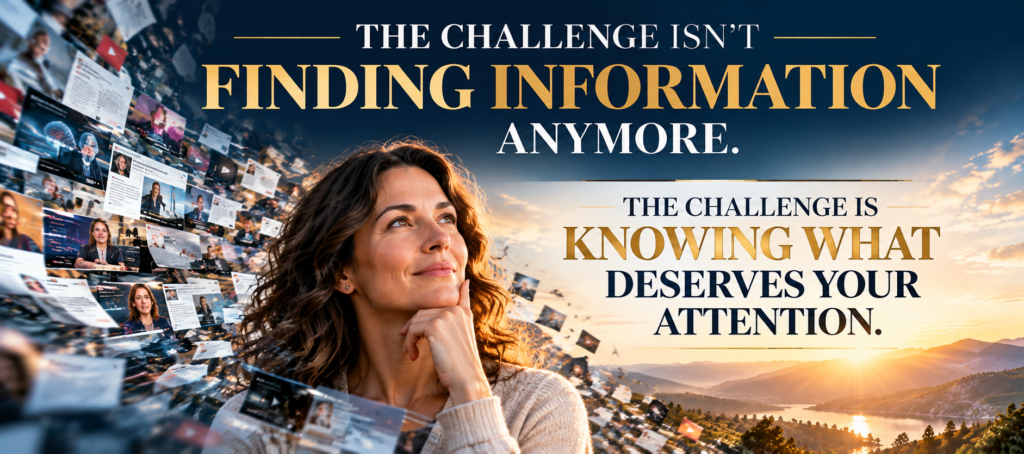
TOO MUCH INFORMATION
Hundreds of teachers.
Thousands of videos.
Endless methods.
Constant marketing.
Conflicting claims.
The challenge isn’t finding information anymore.
The challenge is knowing what deserves your attention.
That’s why discernment may become one of the most important professional skills of the next decade.
Don’t ask only:
“Who should I learn from?”
Ask:
“How do I determine whether what I’m being taught is actually valuable?”
That’s a much more powerful question.
THE BIGGEST OPPORTUNITY
IS STILL AHEAD
For all the progress hypnosis has made, we are nowhere near its potential.
Millions of people still misunderstand what hypnosis is.
Many have never considered using it.
Others remain interested but don’t know whom to trust.
Healthcare professionals vary enormously in their understanding of it.
Businesses barely understand how hypnotic principles, attention, expectation, communication, and state management can apply to performance.
Athletes represent another enormous opportunity.
Education.
Entertainment.
Personal development.
Professional performance.
Behavioral change.
Stress management.
The list continues.
The opportunity isn’t simply getting a larger percentage of existing hypnosis clients.
It's dramatically expanding the number of people who understand when hypnosis might be useful to them.
That requires better education.
Better practitioners.
Better communication.
Better research.
Better marketing.
Better professional standards.
And better access.
THE NEXT EVOLUTION
STARTS WITH US
There probably isn’t going to be one moment when someone announces:
“Hypnosis has entered its next era.”
It will happen gradually.
One practitioner becomes better at explaining their work.
Another specializes.
Another creates a better delivery model.
A researcher answers another question.
A trainer raises their standards.
A new hypnotist chooses substance over hype.
Technology removes another barrier.
A skeptical consumer has an extraordinary experience.
A physician makes a referral.
A coach incorporates hypnosis.
A practitioner shares an idea that changes how thousands of others work.
And eventually we look around and realize the profession has changed.
That’s how evolution works.
Not through one breakthrough.
Through thousands of improvements compounding.
And perhaps that’s the most exciting part.
The future of hypnosis isn't something we're waiting to discover. We're creating it.
Every time we improve our craft.
Every time we question something we’ve always assumed was true.
Every time we share an idea.
Every time we become more professional.
Every time we communicate what we do more effectively.
Every time we help another person experience meaningful change.
There has never been more technology available to us. More access to information. More ability to communicate. More ways to reach people.
Or more opportunity for a talented practitioner to build something meaningful.
So the question isn’t whether hypnosis will evolve.
It will.
The question for every one of us is much more personal:
WHAT ROLE ARE YOU GOING TO PLAY IN WHAT COMES NEXT?




HYPNOSIS WORLD MAGAZINE
Founding Issue #001 • September 1, 2026
The World of Hypnosis. Delivered Every Tuesday.
